Cañada de la Virgen: The Ancient Pyramid Most Travelers Have Never Heard Of
Just outside San Miguel de Allende, a pre-Hispanic archaeological site offers pyramid structures, astronomical alignments, and sweeping valley views, without the crowds.
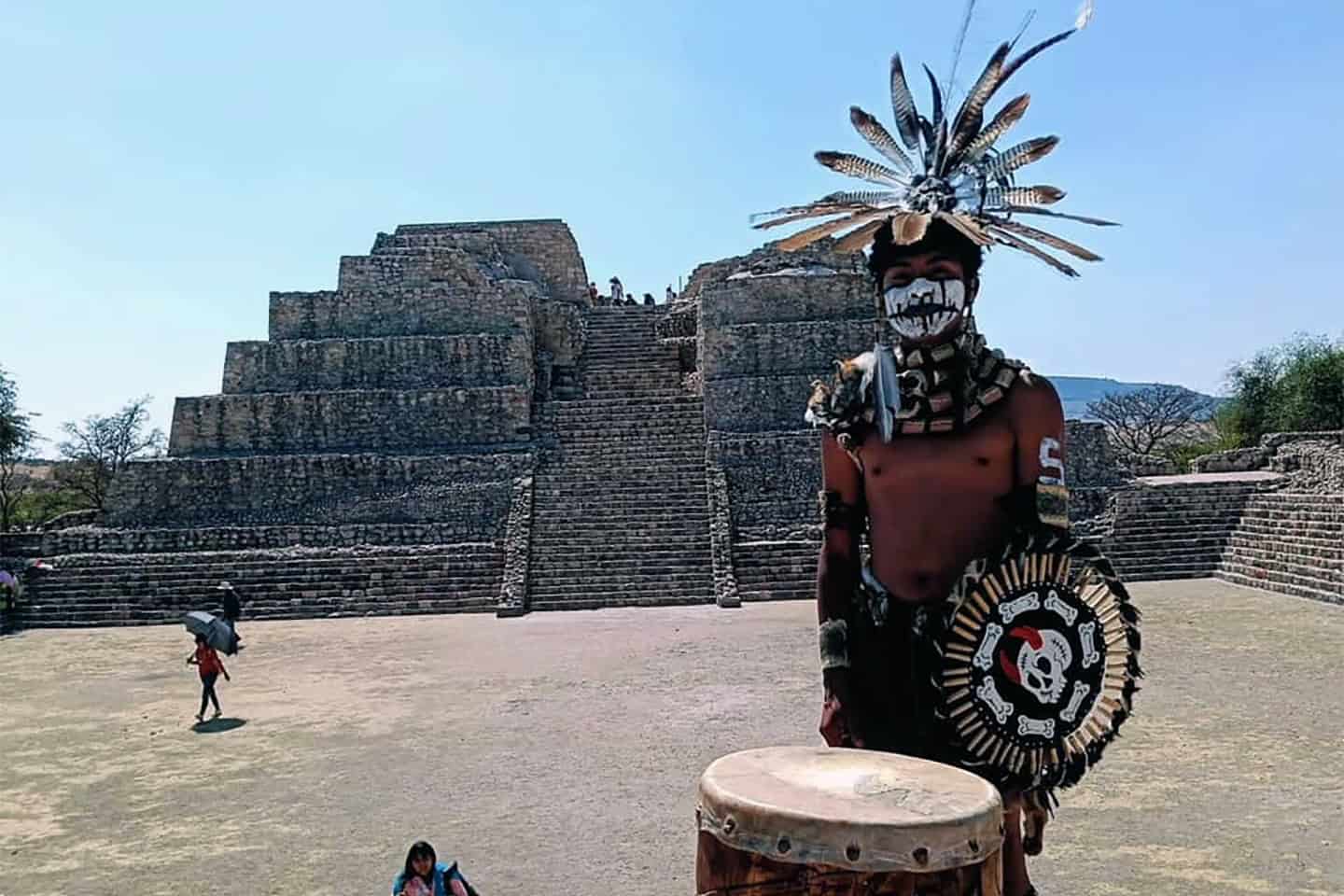
There's a moment, about forty minutes into the drive southwest from San Miguel de Allende, when the landscape shifts. The cobblestoned colonial streets and candy-colored facades give way to open scrubland, rolling hills studded with mesquite and huizache trees, and a sky so wide it feels theatrical. The road narrows. The air smells like dust and dried herbs. And then, rising from a ridge above the valley floor, you see them: the stone structures of Cañada de la Virgen, quiet and imposing and entirely unbothered by the modern world.
Most international travelers who visit San Miguel de Allende never make it here. They know about the Parroquia, the rooftop bars, the cooking classes and gallery walks. And those things are wonderful. But Cañada de la Virgen offers something else entirely: a direct encounter with a civilization that read the stars, built monuments to the solstice, and thrived in this seemingly austere landscape for centuries before the Spanish arrived.
A Site That Rewrites What You Think You Know
Cañada de la Virgen is not Teotihuacán. It's not Chichén Itzá. There are no souvenir vendors lining the walkway, no busloads of cruise-ship passengers, no sound-and-light shows. What you get instead is a small, meticulously excavated archaeological complex, a stepped pyramid, a ceremonial plaza, several secondary structures, set on a hilltop with unobstructed views of the surrounding valley and the distant Sierra de Guanajuato.
The site was built and occupied by the Otomí people (and possibly other groups) roughly between 540 and 1050 CE. That places it in the same broad era as the great Mesoamerican civilizations, but Cañada de la Virgen belongs to a different tradition, less monumental, more intimately connected to the rhythms of the sky and the agricultural calendar.
What makes the site genuinely remarkable is its astronomical precision. The main pyramid (known as the House of the Thirteen Heavens), is oriented so that on specific dates, the sun aligns with the structure's central axis in ways that would have marked the solstices and equinoxes. This wasn't decorative symbolism. It was functional engineering, a calendar built in stone, used to time planting and harvesting cycles that sustained entire communities in a semi-arid environment where timing was everything.
Walking the Site
Visits to Cañada de la Virgen are guided, which is actually one of the best things about the experience. The guides (often local archaeologists or trained specialists) walk you through the complex slowly, explaining each structure's purpose, pointing out details in the stonework, and placing everything within the broader context of Mesoamerican civilization.
The walk from the visitor center to the main complex takes about twenty minutes along a gently climbing path through the scrubland. It's not strenuous, but the terrain is uneven and the sun can be strong, comfortable shoes and a hat are worth bringing. Along the way, guides often stop to point out medicinal plants, explain the geology, or identify birds. The area is surprisingly rich in wildlife, including hawks, roadrunners, and the occasional coyote.
Once you reach the pyramid itself, the scale becomes apparent. It's not towering in the way of Teotihuacán's Pyramid of the Sun, but it's substantial, and its position on the ridge gives it a commanding presence. You can't climb to the top (conservation takes priority), but you can walk around the base, enter the ceremonial plaza, and examine the secondary structures where archaeologists have found burials, offerings, and evidence of ritual activity spanning centuries.
The views alone are worth the visit. Standing at the edge of the complex, you look out across a vast, largely unchanged landscape, the same horizon that the site's original builders would have watched for the first light of the solstice sunrise. There's a stillness to the place that feels earned, not manufactured.
Why It Matters
Mexico has no shortage of archaeological sites, and the famous ones, Teotihuacán, Palenque, Monte Albán, Chichén Itzá, deserve their reputations. But the sheer fame of those sites can obscure the fact that pre-Hispanic civilization in Mexico was enormously diverse. Not every community built massive urban centers. Many, like the people of Cañada de la Virgen, created smaller, more specialized sites that served astronomical, ceremonial, and agricultural functions within regional networks.
Visiting Cañada de la Virgen reminds you that Mexico's indigenous heritage isn't confined to the blockbuster sites and museum collections. It's woven into the landscape everywhere, in the alignment of a stone wall with a distant mountain peak, in the selection of a hilltop for a ceremonial plaza, in the deep knowledge of plants and seasons that sustained life in challenging environments.
For travelers staying in San Miguel de Allende, it also adds an entirely different dimension to the trip. San Miguel's colonial beauty tells one story about Mexico, the story of the Spanish era, of silver wealth and baroque churches and painted facades. Cañada de la Virgen tells the older story, the one that was already ancient when the first Spanish missionaries arrived.
Planning Your Visit
Cañada de la Virgen is located about 30 kilometers southwest of San Miguel de Allende. The drive takes roughly 40 minutes on mostly paved roads. Here's what to know:
Access: The site can only be visited with an authorized guide. Tours typically depart from the visitor center at scheduled times (usually mornings). It's best to arrange your visit through your accommodation's concierge, at La Residencia San Miguel, the team can organize private guided excursions that include transportation and a knowledgeable guide.
Duration: Plan for about 3 hours total, including the drive, the walk to the site, and the guided tour.
Best time to visit: The dry season (November through April) offers the most comfortable conditions, clear skies, moderate temperatures, and excellent visibility. The equinox periods (late March and late September) are particularly special, as the astronomical alignments are most dramatic.
What to bring: Comfortable walking shoes, sun protection (hat, sunscreen), water, and a camera. There's no shade on the hilltop, so layers for the morning and sun protection for midday are both important.
Combine with: A visit to the nearby community of San Miguel Viejo, which has its own small archaeological remains, or a stop at one of the region's thermal springs on the way back to town, a perfect way to end a morning of exploration.
Cañada de la Virgen is one of the many extraordinary experiences within reach of La Residencia San Miguel. From ancient pyramids to colonial churches, hot springs to highland trails, San Miguel de Allende offers a depth of discovery that few cities can match.
